




Histoire
 Répertoriée vers 1343, la terre de Meez était un fief relevant du comté de Namur, elle comprenait 32 bonniers de terre et d’alleux, chargés de 20 muids d’épeautre de rente.
L’appellation « Meez » apparaît dans un document de 1295 sous la forme de « Meis », probablement dérivée du latin « mansus » qui veut dire maison, ferme ou habitation. La villa romaine se composait en réalité d’un certain nombre de manses. Et la manse comprenait une habitation et une exploitation agricole complète 1.
En 747 déjà, le domaine rural de Meez est désigné sous le nom « Manso ». L’actuelle « Chaussée Romaine » située entre Meez et Wespin fait partie de l’ancienne voie romaine qui allait de Bavay (France) à Trèves (Allemagne) en passant par Dinant. On peut imaginer l’intérêt d’une implantation le long de la voie romaine et à proximité d’une agglomération (Bouvignes, Dinant ?) 2.
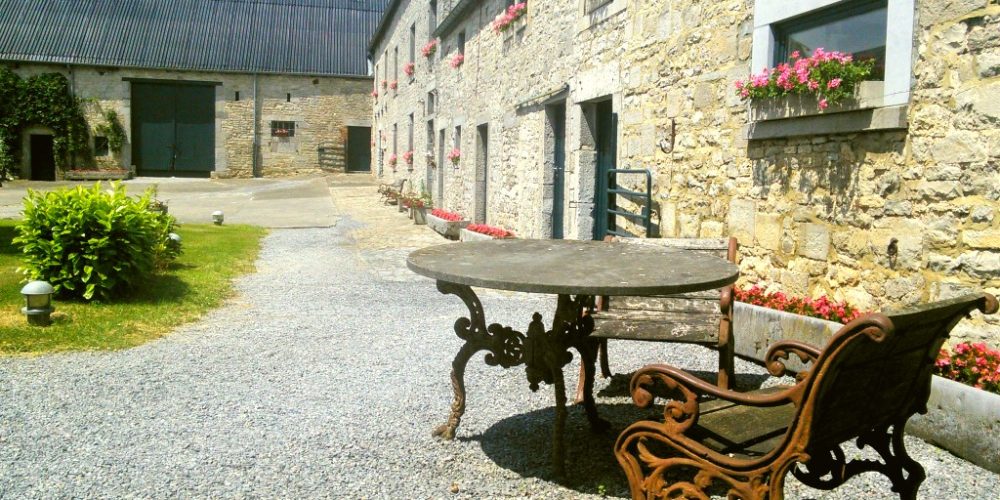
 La « grande cense de Meez » était située presqu’au centre de ces terres. Dans la langue ancienne, « cense » signifie « ferme ». Au Moyen Âge, pendant plusieurs siècles, l’exploitation des moutons à Bouvignes et dans les censes de Wespin et Meez a constitué une source importante de revenu. Aujourd’hui, la moitié des bâtiments de la Ferme de Meez est à usage résidentiel, l’autre moitié des bâtiments est consacrée à l’élevage bovin 2.
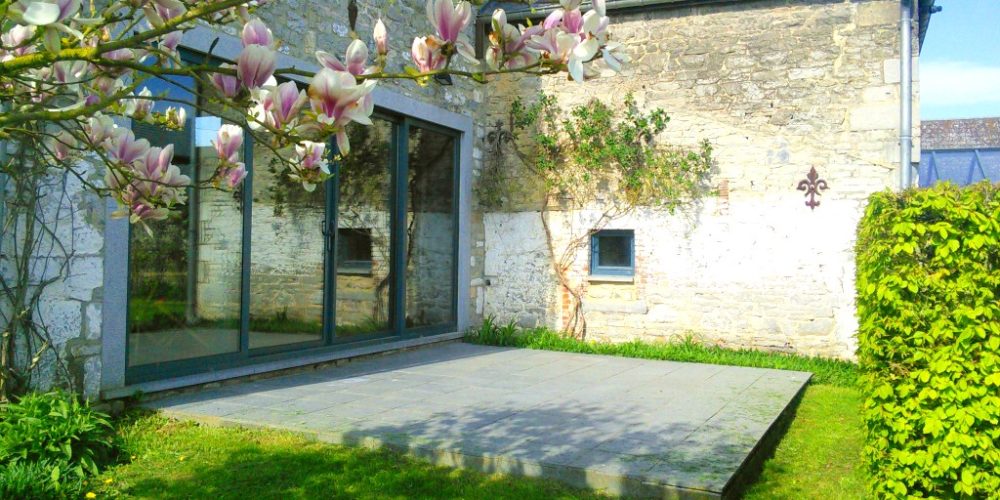
Bien que la Ferme de Meez ait subi de nombreuses transformations, une partie est encore ancienne. On peut lire la date de 1613 sur un écu intégré au porche. L’actuelle ferme de Meez constitue un quadrilatère en moellons de calcaire des XVII e et XIX e siècles. Le logis de deux niveaux semble avoir été construit en deux phases durant la seconde moitié du XVII e siècle. Sa partie gauche a été allongée par l’aménagement d’une étable au rez-de-chaussée et d’une habitation à l’étage tandis qu’à droite, ce sont des étables sous fenil, contemporaines du logis, qui allongent ce dernier. D’autres étables sous fenil occupent les ailes est et sud. A l’ouest, deux importantes granges occupent l’espace. L’une remontant au XVII e siècle, l’autre qui lui est parallèle, a été bâtie en pierre et en brique en 1835 3.
 De nos jours, Bouvignes-sur-Meuse n’est plus qu’une section de l’entité de Dinant. Mais dans le passé, elle avait le statut de ville et appartenait au comté de Namur. Implantée sur la rive ouest de la Meuse, face à Dinant sur l’autre rive, elle a longtemps rivalisé avec sa voisine. Sa position à la frontière du comté de Namur en faisait un véritable verrou sur la Meuse contre la Principauté de Liège, dont dépendait la ville de Dinant.
 Au Moyen Âge, Bouvignes s’est développée au pied de son église et de son château comtal, elle s’est entourée de murailles, de tours et de portes. Les vestiges de l’enceinte qui entourait la vieille ville et les ruines du château de Crèvecœur démontrent l’importance stratégique du lieu. L’église Saint-Lambert et la maison espagnole témoignent de son riche passé.
 Au-delà de son rôle défensif, Bouvignes a connu un développement commercial dans des activités comme la dinanderie, c’est-à-dire le travail du cuivre, la tannerie, la céramique… Mais après une série de conflits et de sièges, la cité a été détruite, puis reconstruite, sans jamais avoir pu retrouver sa splendeur du Moyen Âge. C’est probablement ce qui a préservé son patrimoine.
Abritée dans la maison espagnole, la Maison du patrimoine médiéval mosan est un musée qui retrace l’Histoire de la vallée de la Meuse.
 Accrochée à son éperon rocheux, surplombant la Ville de Dinant, la Citadelle est aménagée en musée d’armes et d’histoire.
La Collégiale Notre-Dame de Dinant : Vers l’an 320, Saint Materne aurait bâti un oratoire au pied de l’éperon rocheux surplombant la Meuse. L’église, agrandie au VIIe siècle, fut élevée au rang de collégiale par l’Evêque Richier en 934.
Selon la légende, le Rocher Bayard fut brisé en deux par un coup de sabot du fabuleux Cheval Bayard monté par les quatre fils Aymon.
Dinant, La Voix Cuivrée. C’est le slogan de la ville en l’honneur du dinantais Adolphe Sax, l’inventeur du saxophone.
- Toponymie de Bouvignes, dinant.be/patrimoine/toponymie/toponymie-de-bouvignes
- Les Echos de Crèvecœur (Cercle bouvignois d’histoire, d’archéologie et de folklore) numéro 32/2010 consacré au terroir médiéval de Wespin.
- Le patrimoine monumental de la Belgique, Volume 22, 1, Namur, Arrondissement de Dinant, par Belgique. Ministère de la région wallonne.